Choosing the Right Size Picture Frame: A Complete Guide
Choosing the Right Size Picture Frame: A Complete Guide
Choosing the right size picture frame might seem simple — until you’re standing in the store (or scrolling online) wondering whether to go with 8×10, 11×14, or something bigger. The right frame size doesn’t just hold your photo; it enhances it, balances your space, and elevates your décor.
Here’s how to choose the perfect size frame with confidence.
1. Start with Your Photo Size
The most important factor is the actual size of your image.
Common photo sizes include:
6×4″ (standard prints)
7×5″
10×8″
14×11″
20×16″
If you want a clean, minimal look, choose a frame that exactly matches your photo size.
If you want something more polished and gallery-style, choose a larger frame and add a mount board (the border around the photo). For example:
10×8 ” photo in an 12×10″ frame with mount
A3 photo in a 20×16″ frame with mount
This creates visual breathing room and draws attention to the image.
2. Consider the Wall Space
Frame size should be proportional to the wall where it will hang.
Small Wall Areas
(Entryways, narrow hallways, beside a desk)
7×5″
10×8″
Small gallery groupings
Medium Wall Areas
(Above a side table, bedroom wall, office wall)
14×11″
20×16″
Small gallery wall layouts
Large Wall Areas
(Above a sofa, bed, or fireplace)
20×16″
24×36″
Oversized statement frames
Multi-photo collage frames
Rule of thumb:
Wall art above furniture should be about 60–75% of the furniture’s width.
3. Think About Viewing Distance
The farther away viewers will stand, the larger your frame should be.
Close viewing (desk, bedside table): smaller frames work well
Across the room (living room, dining area): larger frames make more impact
Tiny frames on large walls often look lost. Big walls call for bold sizing.
4. Decide on a Statement vs. Subtle Look
Ask yourself:
Do you want the photo to blend into the space?
Or do you want it to be a focal point?
Subtle & Minimal
Choose a frame close to the photo size.
Bold & Dramatic
Choose a larger frame with matting or an oversized print.
Large frames naturally draw the eye and create visual weight.
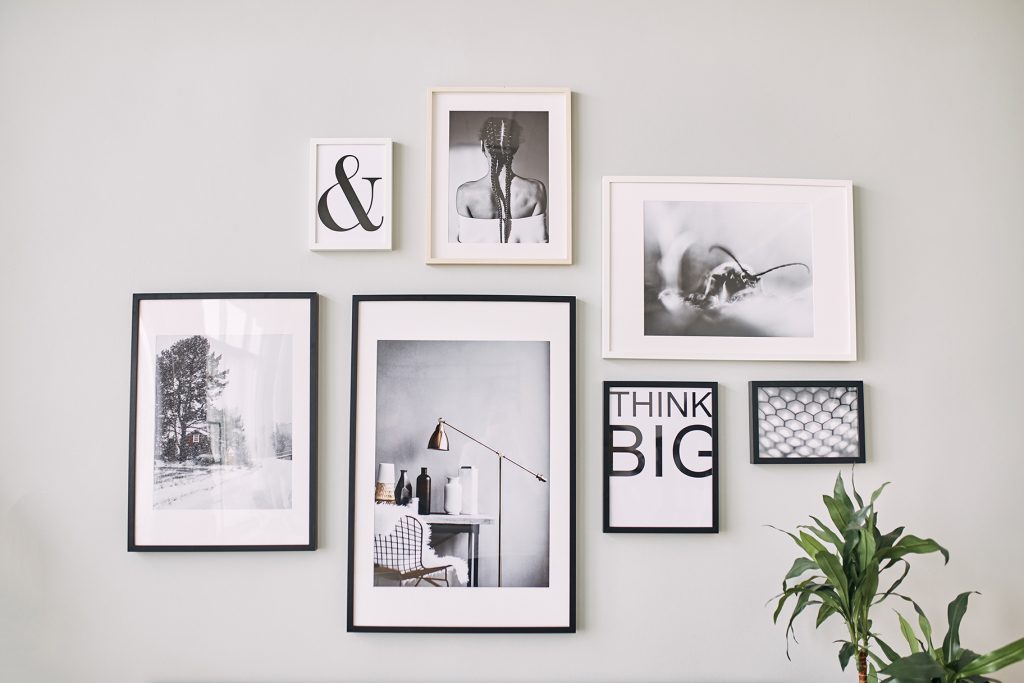
5. Gallery Walls: Balance Matters
If you’re creating a gallery wall:
Mix sizes (small + medium + large)
Anchor the arrangement with one larger frame
Keep spacing consistent (2–3 inches between frames)
Lay everything out on the floor first before hanging.
6. Don’t Forget Mounting
Mount boards affect overall frame size significantly.
Benefits of mounting:
Makes smaller photos feel more substantial
Adds contrast
Creates a professional, finished look
Protects the photo from touching glass
A wider mat (2–4 inches) gives a more high-end, gallery feel.
7. Tabletop vs. Wall Frames
For tabletop frames:
4×6 and 5×7 are classic choices
8×10 works well for statement desk pieces
For wall frames:
Go larger than you think you need
Bigger frames usually look more intentional
8. Proportion Is Everything
A frame should complement the photo, not overpower it.
Thin frames work well with small photos
Thicker frames balance larger artwork
Ornate frames pair well with traditional or vintage prints
Sleek frames suit modern photography
Keep proportions visually balanced.
9. When in Doubt, Size Up
One of the most common decorating mistakes is choosing frames that are too small. Slightly larger frames almost always look more polished and deliberate.
If you’re unsure between two sizes, the larger option is often the better choice — especially for wall art.
Final Thoughts
Choosing the right size picture frame is about balance:
Balance between photo and mat, frame and wall, and art and room.
Take a few measurements, consider your viewing distance, and think about the overall feeling you want to create.
The right frame size doesn’t just hold your picture — it gives it presence.
When sized correctly, your photo doesn’t just hang on the wall.
It belongs there.